Behind the Scenes Matters: Expanding Art Prep and Storage
The expansion added significant new conservation, prep, and vault areas—including a visible, public-facing art vault that invites visitors to see the often-invisible work of preservation….
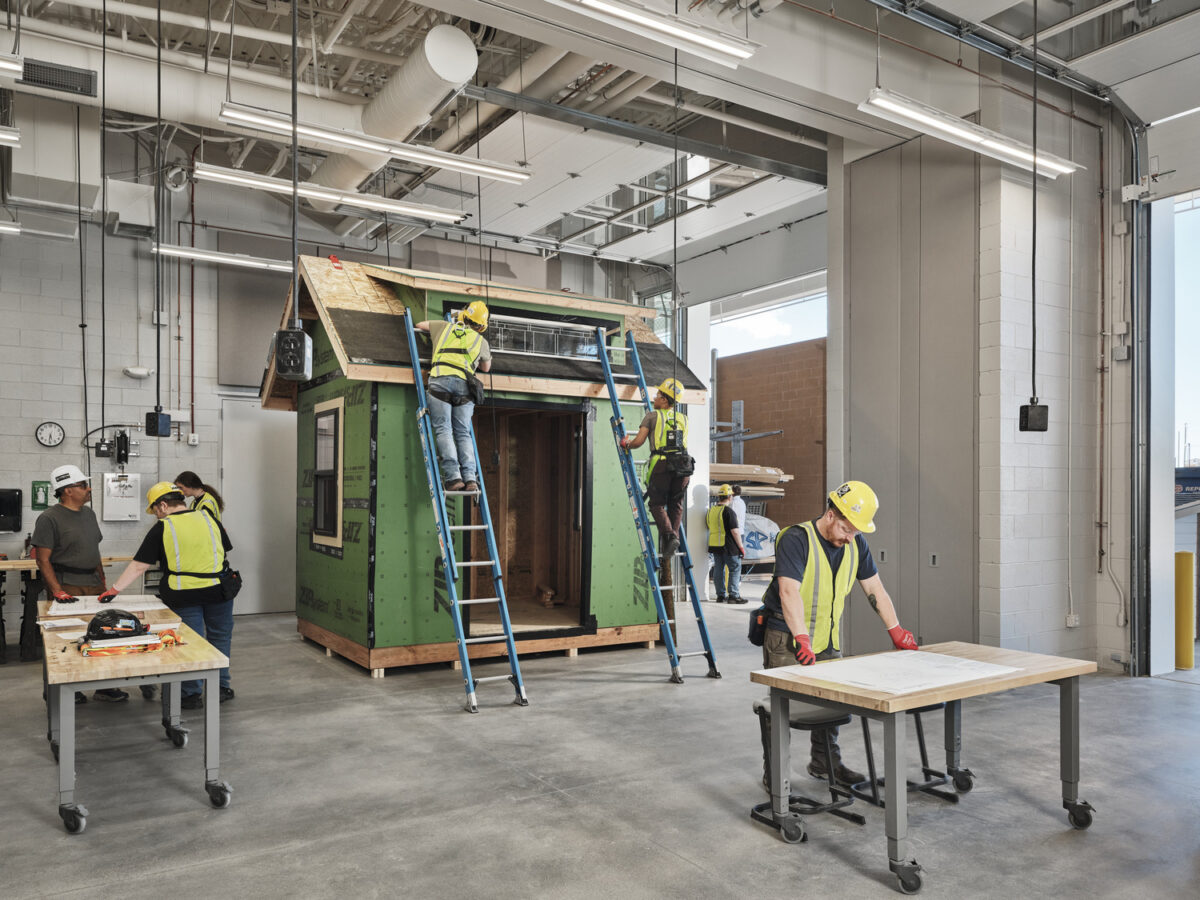
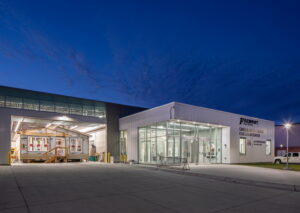
For decades, vocational tracking was often relegated to isolated basements or windowless corridors—spaces that implicitly communicated a “non-college” alternative. Today, modern CTE spaces are dismantling that outdated stigma. By bringing technical education front and center, we are declaring that these pathways are high-tech, high-wage, and high-prestige.
At the Fremont High School CTE Center, this cultural shift is driven by “Pride of Place.” Transparent architecture, featuring glass walls and public commons, makes learning visible. When a freshman walks by a robotics lab, a health science suite, or an advanced construction tech lab with a house being constructed it sparks immediate curiosity. It transforms the environment from a hidden “shop class” into a professional launchpad, instilling profound pride in the students enrolled and elevating the entire school’s culture.
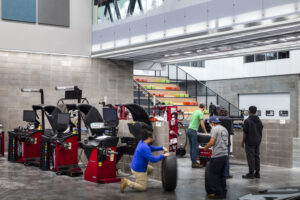
The most successful CTE programs blur the lines between high school, higher education, and the workforce. Students are no longer just working toward a high school diploma; they are building a portfolio of stackable, industry-recognized credentials—from AWS welding certifications and OSHA-10 to healthcare micro-credentials and software certifications.
Through deeply integrated partnerships, like the collaborative model with Metropolitan Community College (MCC), high school students leverage dual enrollment to earn college credit before graduation. This “earn while you learn” model drastically cuts post-secondary debt and accelerates their time-to-workforce. Furthermore, the modern CTE space acts as a staging ground for Work-Based Learning (WBL), seamlessly transitioning students from simulated labs to actual apprenticeships and job shadowing with local enterprise partners.
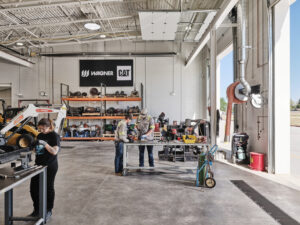
Activating these spaces delivers a measurable return on investment:
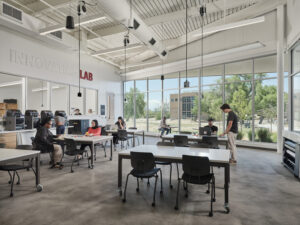
A truly impactful CTE facility does not go dark at 3:30 PM. The Fremont center exemplifies shared community investment. By designing flexible, multi-use spaces, high school campuses are transforming into civic centers for lifelong economic mobility. In the evening, these same cutting-edge labs host adult re-skilling programs, and upskilling sessions for incumbent workers. This ensures the facility remains a pulsing hub of workforce development around the clock.
This commitment to creating continuous, community-anchored educational ecosystems extends directly into our higher education work, demonstrated by our design for the Center for Applied Science and Technology (CAST) at the Community College of Aurora. Built as a beacon for regional economic mobility and STEM innovation, the CAST facility bridges the gap between foundational secondary education and high-demand, tech-driven careers. Featuring purpose-built environments for applied sciences and technical trade programs, the facility was designed from the ground up to reflect actual modern industry workflows. By co-locating rigorous hands-on technical labs with community gathering zones, CAST serves as an accessible launchpad for non-traditional students, local professionals upskilling for tomorrow’s market, and high school graduates entering an increasingly sophisticated workforce.